
 Pin it
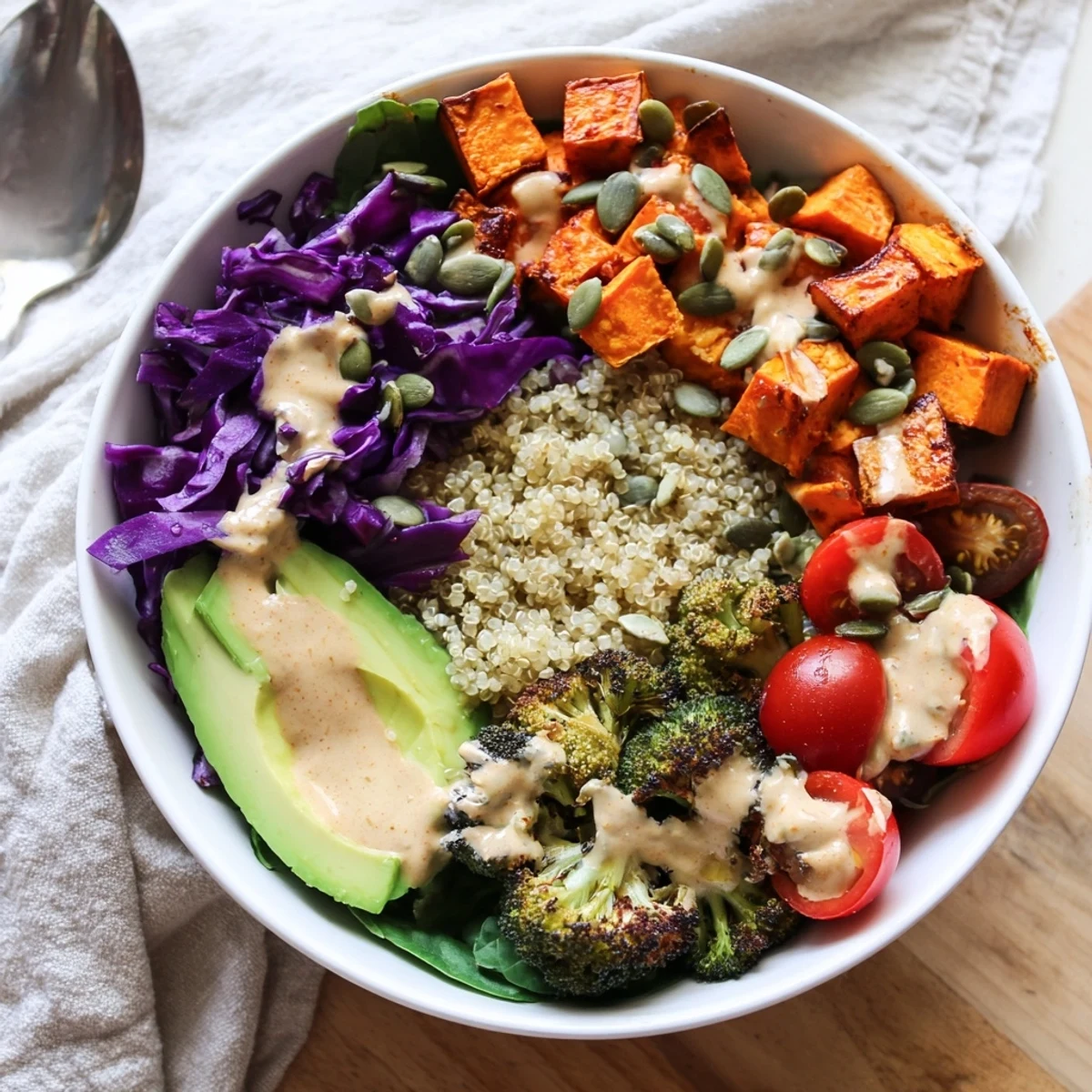
 This vegan buddha bowl brings together fluffy quinoa, oven-roasted sweet potato, broccoli, and cauliflower seasoned with smoked paprika for a warm, satisfying base.
Topped with fresh cherry tomatoes, crisp red cabbage, creamy avocado, and baby spinach, every bite offers a balance of textures and vibrant flavors.
The star of the dish is a smooth tahini dressing made with lemon juice, maple syrup, and garlic, drizzled generously over the top and finished with crunchy pumpkin seeds.
The farmer who sells me sweet potatoes every Saturday morning always asks what I am making with them, and last weekend I told her about these bowls and she gave me an extra handful of cherry tomatoes for free. There is something deeply satisfying about assembling a meal where every color on the plate comes from something grown in dirt. This vegan buddha bowl has become my answer to the midweek slump when energy is low but the body craves real nourishment.
My roommate walked in while I was arranging roasted vegetables in circles around a bowl and asked if I was taking photos for a magazine. I was not, but the act of making food look lovely for no audience except yourself is a small form of self care that I highly recommend.
Ingredients
- 1 cup quinoa, rinsed: Rinsing removes the bitter saponin coating and makes a huge difference in the final flavor.
- 1 medium sweet potato, peeled and cubed: Cut pieces roughly the same size so they roast evenly and you avoid the dreaded half crunchy half mushy situation.
- 1 cup broccoli florets: Do not toss the stems, they get incredibly sweet when roasted.
- 1 cup cauliflower florets: The edges that go deeply golden are the best bites, so spread them out and do not crowd the pan.
- 2 tbsp olive oil: A light coating is all you need, too much makes everything soggy instead of caramelized.
- 1/2 tsp smoked paprika: This single spice transforms plain roasted vegetables into something that tastes like you put in far more effort than you did.
- 1 cup cherry tomatoes, halved: Their natural acidity balances the richness of the tahini dressing perfectly.
- 1 cup red cabbage, thinly sliced: Adds a satisfying crunch and a shock of purple that makes the whole bowl feel alive.
- 1 large avocado, sliced: Wait to cut the avocado until everything else is ready so it does not brown.
- 1 cup baby spinach: A handful per bowl tucked underneath the warm grains wilts slightly and adds a lovely tender texture.
- 1/4 cup pumpkin seeds: Toast them in a dry skillet for three minutes and your future self will thank you.
- 1/4 cup tahini: Stir it well before measuring because the oil separates and settles at the top.
- 2 tbsp lemon juice: Fresh is nonnegotiable here, the bottled stuff tastes flat against the other bright ingredients.
- 1 tbsp maple syrup: Just enough to round out the bitterness of the tahini without making the dressing sweet.
- 1 clove garlic, minced: Let it sit for a few minutes after mincing to develop more of its beneficial compounds.
Instructions
- Roast the vegetables:
- Preheat your oven to 400 degrees and toss the sweet potato, broccoli, and cauliflower with olive oil, smoked paprika, salt, and pepper. Spread everything in a single layer on a baking sheet and roast for 20 to 25 minutes, stirring once halfway, until the edges are golden and the centers are tender.
- Cook the quinoa:
- While the vegetables roast, combine rinsed quinoa, water, and a pinch of salt in a saucepan, bring it to a boil, then reduce the heat, cover, and simmer for 15 minutes. Let it sit off the heat with the lid on for another 5 minutes before fluffing with a fork.
- Whisk the dressing:
- In a small bowl, whisk together the tahini, lemon juice, maple syrup, minced garlic, two tablespoons of water, salt, and pepper until completely smooth. Add more water a splash at a time until it drizzles easily off a spoon.
- Build your bowls:
- Divide the quinoa among four bowls and arrange the roasted vegetables, cherry tomatoes, sliced cabbage, avocado, and spinach on top. Drizzle generously with tahini dressing and finish with a scattering of pumpkin seeds.
 Pin it
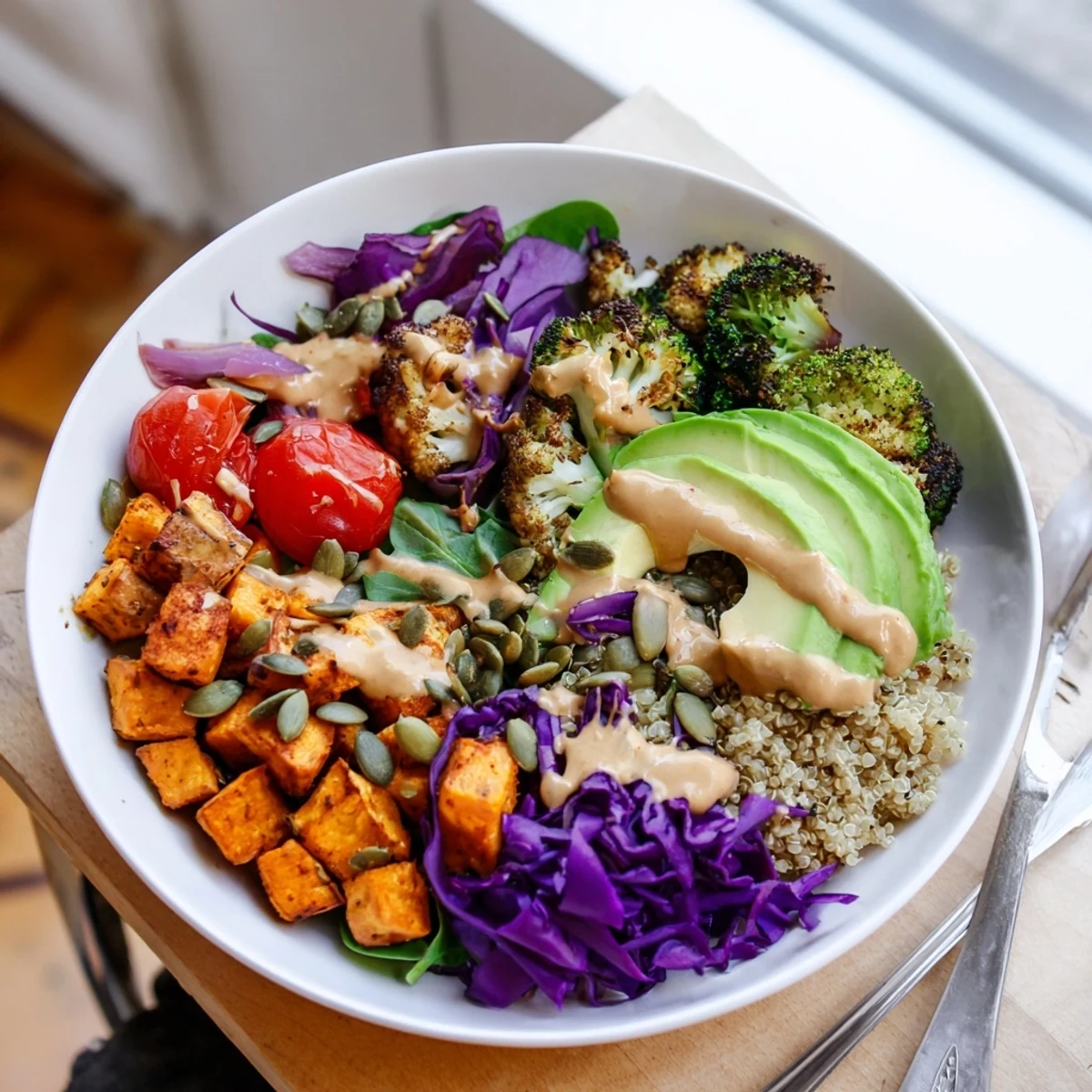
 I brought a version of this bowl to a potluck where three people asked me for the recipe, and one of them was a professional chef who said the dressing was better than the one at his restaurant.
Making It Your Own
The real beauty of a buddha bowl is its flexibility, and I have made this recipe at least thirty times and never the same way twice. In summer I swap the roasted vegetables for raw corn and shaved zucchini, and in fall I add roasted Brussels sprouts and dried cranberries. The formula stays the same: a grain base, something roasted, something raw, something creamy, something crunchy, and a bold dressing to tie it all together.
Keeping Components Ready
On Sundays I often cook a big batch of quinoa and roast a sheet pan of vegetables so that assembling a bowl like this takes ten minutes on a busy Tuesday night. The dressing keeps for a week in a jar in the refrigerator, and the cabbage actually gets better after a day or two as it softens slightly.
Adding Extra Protein
When I am extra hungry or know I will not have time to eat again for many hours, I add crispy baked tofu or a generous scoop of roasted chickpeas to make the bowl more substantial. The nutty flavor of chickpeas pairs especially well with the smoked paprika on the vegetables.
- Press and cube firm tofu, toss with soy sauce and cornstarch, and bake at 400 degrees for 25 minutes until crispy.
- A can of drained chickpeas roasted with olive oil and cumin makes a brilliant crunchy topping.
- Always add extra protein warm, not cold from the fridge, for the best texture.
 Pin it
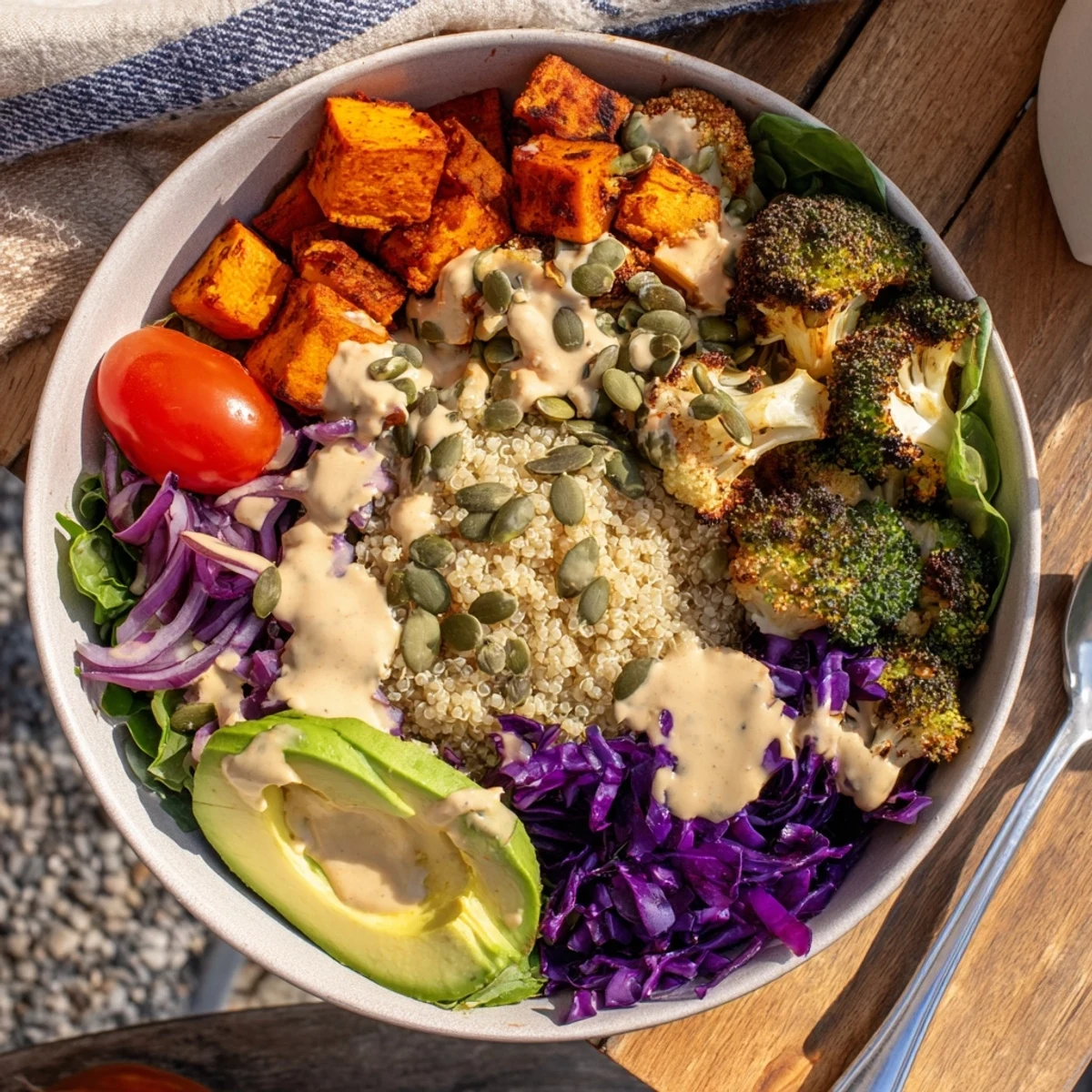
 Every time I make these bowls I am reminded that healthy food does not have to feel like a compromise or a chore. It can be colorful, deeply satisfying, and genuinely exciting to eat.
Recipe Questions & Answers
- → Can I meal prep buddha bowls in advance?
-
Yes, buddha bowls are excellent for meal prep. Cook the quinoa and roast the vegetables up to three days ahead and store them separately in airtight containers in the refrigerator. Add fresh ingredients like avocado and cherry tomatoes the day you plan to eat. Keep the tahini dressing in a sealed jar and drizzle it on just before serving for the best texture and flavor.
- → What grains work best besides quinoa?
-
Brown rice, bulgur, farro, and millet all work beautifully in buddha bowls. Each grain brings a slightly different texture and flavor profile. Brown rice adds a chewy, nutty quality, while farro offers a hearty, slightly chewy bite. Choose whichever grain suits your dietary needs and taste preferences.
- → How do I add more protein to this bowl?
-
Roasted chickpeas, pan-seared tofu, or marinated tempeh are all excellent protein additions that complement the flavors in this bowl. You can also sprinkle hemp seeds or nutritional yeast on top. For a heartier meal, consider adding edamame or a scoop of black beans alongside the vegetables.
- → What can I substitute for tahini in the dressing?
-
If you have a sesame allergy or lack tahini, try using unsweetened sunflower seed butter, almond butter, or cashew cream as a base for the dressing. Adjust the lemon juice and maple syrup quantities to taste, as each alternative has a different richness and flavor profile. A simple olive oil and lemon vinaigrette also works well.
- → How do I get the best results when roasting the vegetables?
-
Spread the vegetables in a single layer on the baking sheet without overcrowding, which allows them to roast rather than steam. Cut the sweet potato into uniform cubes so everything cooks evenly. Roasting at 400°F ensures a caramelized exterior while keeping the inside tender. Flip or stir the vegetables halfway through for even browning on all sides.
- → Is this buddha bowl suitable for a gluten-free diet?
-
Yes, as long as you use naturally gluten-free grains like quinoa, certified gluten-free oats, or rice, this bowl is entirely gluten-free. Double-check that your tahini, smoked paprika, and any packaged ingredients are processed in gluten-free facilities to avoid cross-contamination if you have celiac disease or a severe gluten sensitivity.