
 Pin it
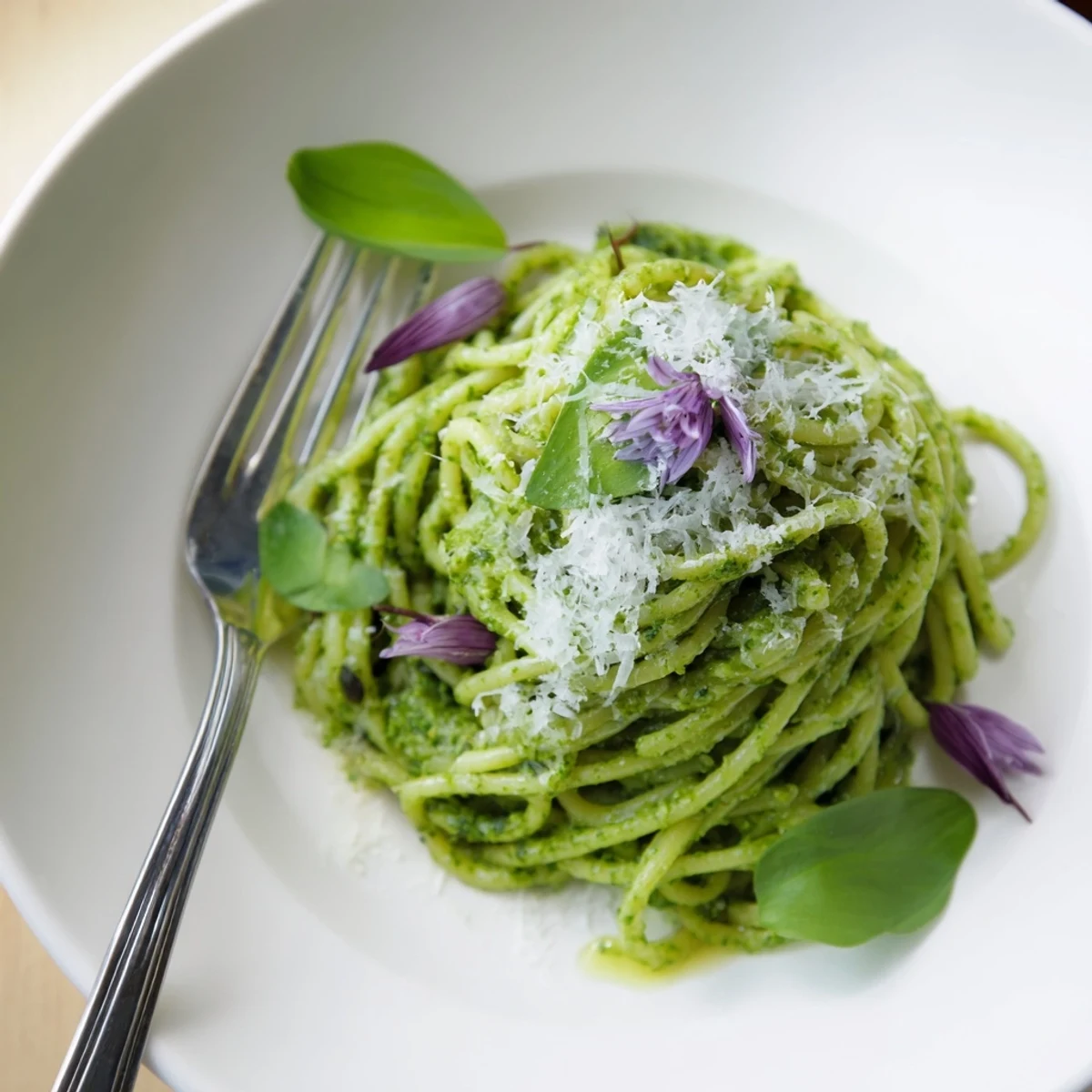
 This wild garlic pesto pasta brings the freshness of spring straight to your plate in just 25 minutes.
Fresh wild garlic leaves are blended with pine nuts, Parmesan, and extra virgin olive oil into a vibrant, aromatic pesto that coats every strand of al dente spaghetti or linguine.
A splash of reserved pasta water creates a silky, glossy sauce. Finish with extra Parmesan and a scattering of wild garlic leaves or edible flowers for an elegant, seasonal Italian dish.
There is a narrow lane near my house that turns into a green tunnel every April, and the smell hit me before I even saw the leaves: wild garlic, everywhere, carpeting the ground like natures own pesto factory waiting to happen.
I brought a bag of leaves home that first evening and blitzed them with whatever I had in the cupboard, and my roommate walked in asking what restaurant had delivered.
Ingredients
- 400 g dried pasta (spaghetti or linguine): Long strands hold the pesto beautifully, but use whatever shape makes you happy.
- 1 tbsp salt: For the pasta water, and do not skip this because it is your only chance to season the pasta itself.
- 80 g wild garlic leaves: Wash them thoroughly since they grow low to the ground and carry grit.
- 30 g pine nuts (or walnuts): Pine nuts give a buttery sweetness, but walnuts add a rustic depth that some people actually prefer.
- 50 g grated Parmesan cheese: The salty backbone of the pesto, so use the good stuff if you can.
- 80 ml extra virgin olive oil: A fruity oil makes a noticeable difference here since the ingredient list is so short.
- 1 small garlic clove (optional): Wild garlic is already punchy, so add this only if you like extra heat.
- Half a lemon, juiced: A squeeze of acidity lifts everything and stops the pesto from tasting flat.
- Salt and freshly ground black pepper: Taste as you go because wild garlic potency varies wildly.
- Extra Parmesan and edible flowers for garnish: Entirely optional but they turn a weeknight bowl into something worth photographing.
Instructions
- Get the water boiling:
- Fill your largest pot with water, add the salt, and bring it to a rolling boil before dropping in the pasta. Cook according to the package until just tender with a slight bite, then scoop out half a cup of the starchy water and set it aside before draining.
- Build the pesto:
- Toss the wild garlic leaves, pine nuts, Parmesan, olive oil, garlic clove if you are using it, lemon juice, salt, and pepper into a food processor. Blend until smooth, scraping down the sides once or twice, then taste and adjust because every batch of wild garlic has its own personality.
- Bring it all together:
- Drain the pasta and drop it straight back into the warm pot, then spoon in the pesto and toss vigorously. Splash in a little of that reserved pasta water until the sauce turns silky and clings to every strand.
- Plate and finish:
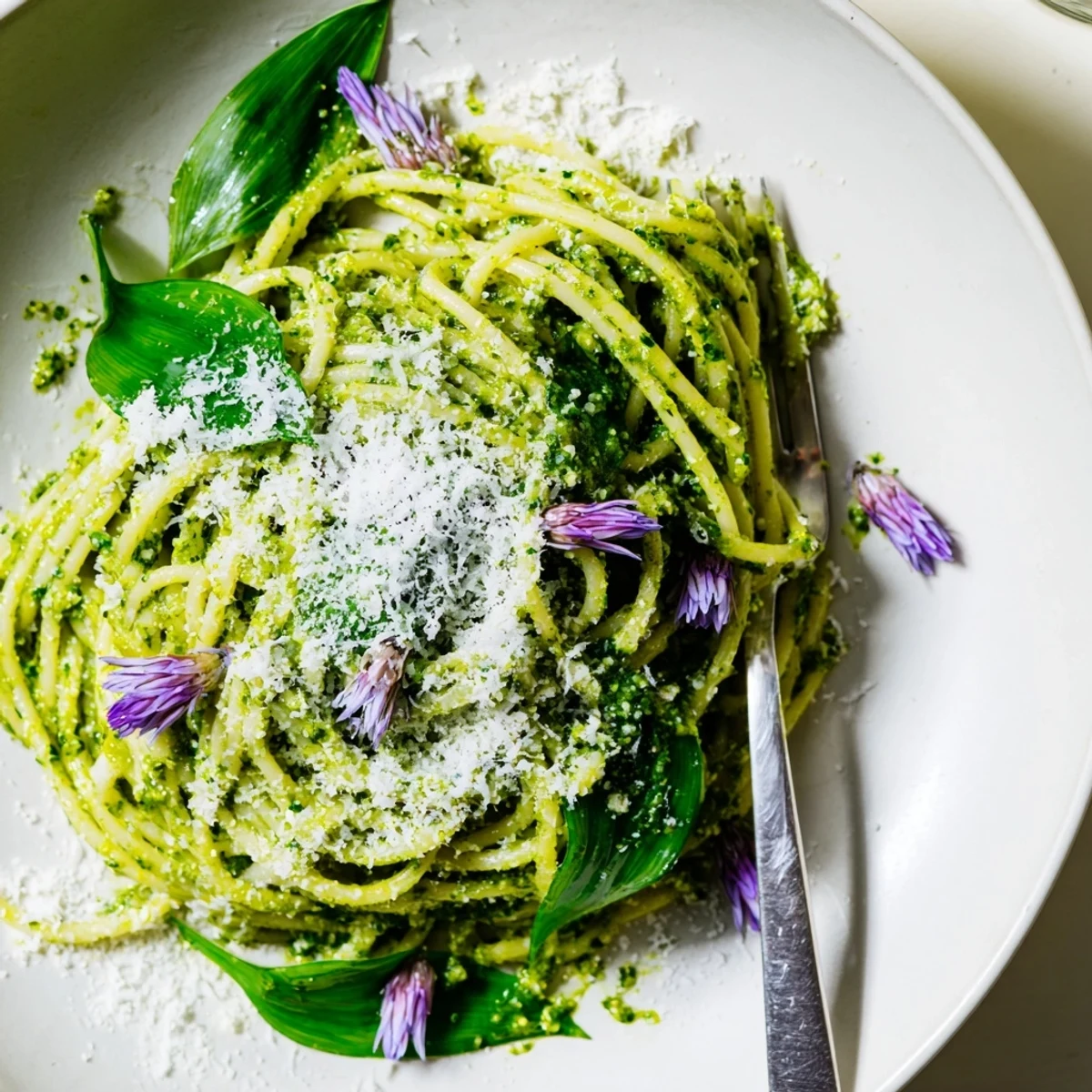
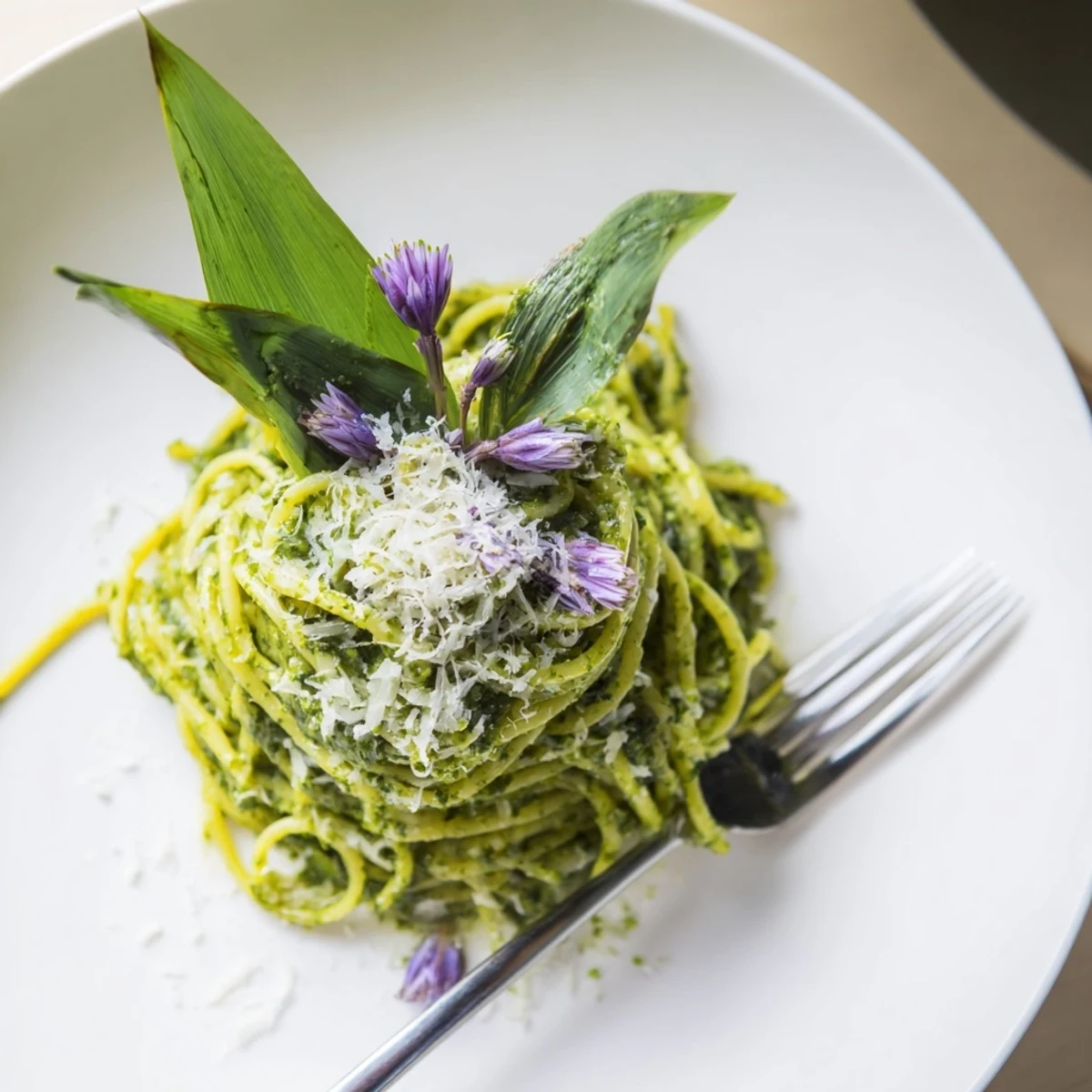
- Divide among bowls right away and shower with extra Parmesan and a few wild garlic leaves or edible flowers if you have them. Eat immediately because this dish waits for no one.
 Pin it
 I made this for a friend who always orders pesto at restaurants and she sat back after the first bite and said nothing, which from her is the highest compliment possible.
What If You Cannot Find Wild Garlic
If you do not have a foraging spot or a farmers market nearby, a mix of regular basil and one extra garlic clove gets you surprisingly close to the real thing.
Keeping It Vegan
Swap the Parmesan for nutritional yeast and you still get that savory depth without any dairy at all.
Choosing The Right Wine And Side
A chilled glass of Pinot Grigio and a simple green salad turn this into a meal that feels complete rather than rushed.
- Toast your pine nuts in a dry pan for two minutes before blending, because the warmth releases oils you did not know were there.
- Sunflower seeds work beautifully if you need a nut free option that still has crunch and body.
- Remember that wild garlic season is frustratingly short, so freeze extra leaves in oil when you find them.
 Pin it
 Every spring I end up with green stained fingers and a fridge that smells like a woodland, and I would not have it any other way.
Recipe Questions & Answers
- → Where can I find wild garlic?
-
Wild garlic, also known as ramsons, grows in damp woodland areas during spring. You can often find it at farmers' markets, specialty greengrocers, or forage it yourself if you're confident in identification. If unavailable, basil makes a fine substitute for a classic pesto.
- → Can I make this pesto without a food processor?
-
Yes, you can use a mortar and pestle for a more traditional approach. Finely chop the wild garlic leaves and pine nuts, then grind them gradually with the Parmesan and olive oil until you reach your desired consistency. The result will be slightly chunkier but equally delicious.
- → How do I store leftover wild garlic pesto?
-
Transfer the pesto to an airtight container, press a piece of plastic wrap directly onto the surface, and refrigerate for up to 5 days. You can also freeze it in ice cube trays for up to 3 months. Thaw individual portions as needed for quick weeknight meals.
- → What pasta shapes work best with this pesto?
-
Long strands like spaghetti, linguine, or fettuccine work beautifully as the pesto clings evenly to each strand. Short shapes like fusilli, penne, or orecchiette are also excellent because the pesto gathers in their crevices and hollows, delivering great flavor in every bite.
- → Is there a vegan version of this dish?
-
Absolutely. Replace the Parmesan with nutritional yeast for a similar umami, cheesy flavor. You can also use a store-bought vegan Parmesan alternative. The rest of the pesto ingredients — wild garlic, pine nuts, olive oil, and lemon juice — are naturally plant-based.
- → Why reserve pasta cooking water?
-
Pasta water contains starch that helps the pesto emulsify and cling to the pasta rather than pooling at the bottom of the bowl. Adding a splash while tossing creates a creamy, silky sauce consistency. It's a simple technique that makes a noticeable difference in the final texture.